Close

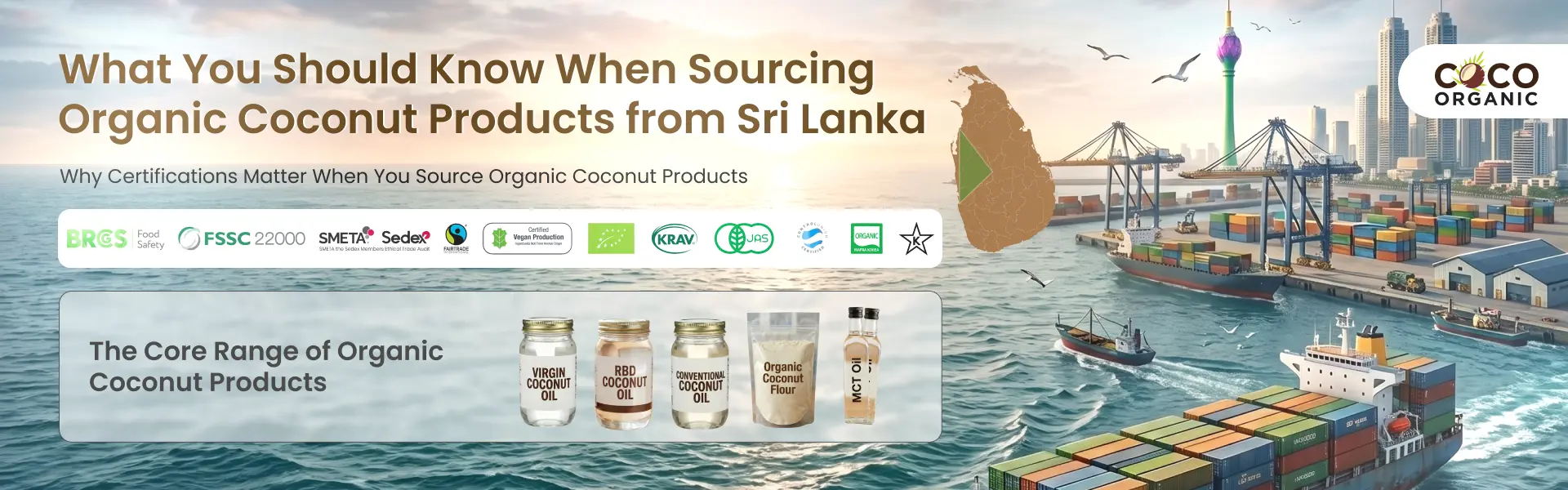
Imagine your brand has just committed to launching a full organic coconut oil line, certified for both the US and Europe, with the first shipment due to ship within a quarter. As you begin your search, one country appears again and again: Sri Lanka. The real challenge, however, becomes clear soon enough, because dozens of exporters present tidy websites and confident promises, while very little separates the dependable ones from the rest.
This guide walks you through what to look for when you buy organic coconut products from Sri Lanka, so you can identify the right supplier with confidence.
Just an hour’s drive north of Colombo lies the coconut triangle, the belt of Kurunegala, Puttalam, and Gampaha districts where most of the island’s coconuts grow. Families across this region have cultivated and pressed coconut for generations, and that long experience shows in the consistency buyers depend on. Mills here understand how to hold a specification, and exporters have already handled the kind of complex orders that can unsettle newer suppliers.
Sri Lanka’s location is another advantage. Colombo’s port sits on one of the world’s busiest east-west shipping lanes, so moving a container out remains a smooth and reliable process compared with more remote origins. When you combine this local expertise with dependable logistics, organic coconut products from Sri Lanka consistently deliver on the factors that truly decide a product launch: steady quality and shipments that arrive on time.
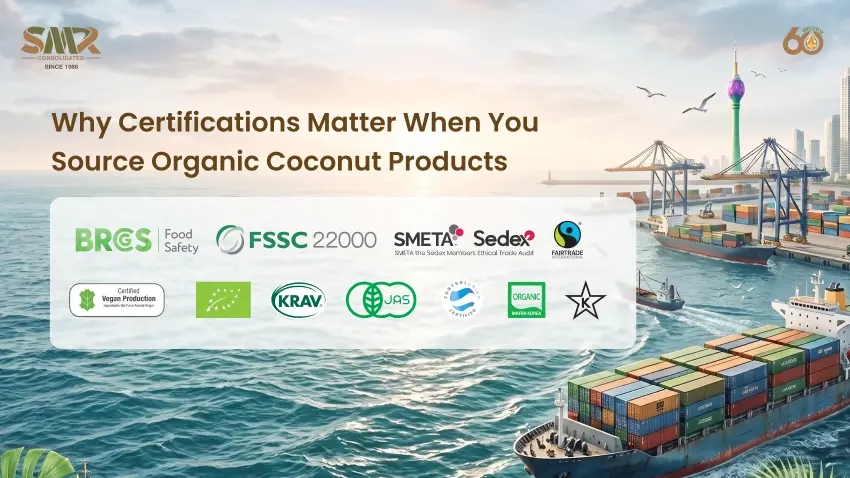
A label on its own means very little. Anyone can print the word “organic” on a drum or bottle, so the certificates behind that claim are what your customers and their auditors will ultimately want to see. For this reason, whenever you weigh up organic coconut products from Sri Lanka, your first step should be to review the supplier’s certifications closely.
Several standards carry real weight in international markets. USDA Organic serves the American market, while EU Organic applies across Europe, and JAS Organic is essential for Japan. On the food-safety side, ISO 22000 and FSSC 22000 govern food-safety management, HACCP controls hazards on the production line, and BRCGS represents the benchmark many European retailers expect before they will stock a product.
Coco Organic holds this full range of certifications through its parent manufacturer, SMR Consolidated, which gives you a clear and traceable path from the certificate on file to the pallet inside your container. One simple habit protects you throughout: always check the expiry date on every certificate yourself, because an out-of-date document can hold your shipment at the port and delay your product launch.
Sourcing several products from a single exporter reduces the number of contracts you have to manage and spares you from chasing multiple suppliers for a certificate of analysis. In most cases, the range of organic coconut products from Sri Lanka comes down to four core lines, and established exporters such as Coco Organic supply all of them:
– Refined (RBD) Coconut Oil: This oil loses its aroma and taste during processing, which makes it the natural choice for frying and food manufacturing wherever you need performance without a coconut flavour in the final product.
– Virgin Coconut Oil: Producers cold-press this oil from fresh coconut without heat, which preserves its natural aroma and flavour and makes it ideal for cosmetic lines and premium food brands.
– MCT (Medium-Chain Triglyceride) Coconut Oil: This concentrate consists of the fatty acids your body converts quickly into energy, and it has become a popular ingredient in sports nutrition and the wider wellness market.
– Coconut Flour: Millers grind dried coconut meat into a gluten-free flour that suits free-from baking and health-focused product ranges.
An attractive website and a competitive price reveal very little on their own. Before you commit, put every shortlist of organic coconut products from Sri Lanka through the same four checks, and the weaker options soon fall away:
Once you complete this groundwork, the difference between a supplier you can build a partnership with and one that’s only talk becomes clear.
Your ideal arrangement depends largely on how you plan to sell. If you operate your own filling line, you will most likely buy organic coconut oil in bulk, which arrives in drums or intermediate bulk containers, and then manage the packing and branding yourself. This route gives you greater control and a better price per litre, though it does ask more of your own operation. If you would rather avoid building additional production capacity, private label coconut oil offers a faster path, because the manufacturer fills and labels the product under your brand and delivers it ready for the shelf.
It also helps to consider whether a supplier is a genuine brand or simply a factory that fills other companies’ labels. Coco Organic is a brand in its own right, selling its own certified organic range under its own name. Behind the brand, its parent company SMR Consolidated manages the manufacturing and fulfils the bulk and private-label orders. As a result, a single relationship offers you two strengths at once: a brand that stands behind its own name and a manufacturer built for volume. This matters because a company with its own products on the shelf has a strong reason to protect its quality. For any buyer sourcing organic coconut products from Sri Lanka, this combination is well worth seeking out.
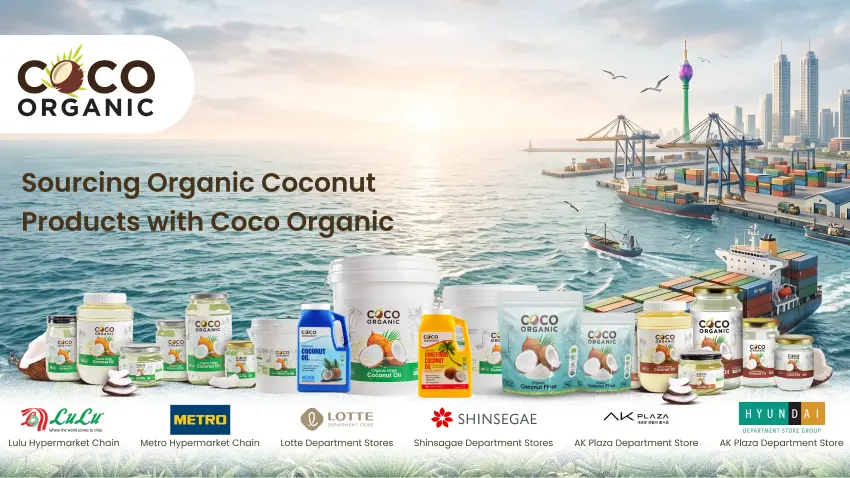
Sourcing organic coconut products from Sri Lanka becomes far simpler once you complete the groundwork. After you have reviewed the certificates, understood the product range, assessed each supplier against the same checks, and matched bulk or private label to the way you sell, you can move forward knowing you have found a partner you can rely on.
Coco Organic operates from Colombo as a certified organic brand, offering refined, virgin, and MCT coconut oil along with coconut flour. Its parent company, SMR Consolidated, manages the manufacturing behind the brand and fulfils bulk and private-label orders for buyers around the world. Internationally recognised certifications back every claim, including USDA Organic, EU Organic, ISO 22000, and HACCP, among others. The brand approaches sustainability and quality with equal seriousness, and its certifications reflect that commitment.
If you are exploring organic coconut products from Sri Lanka for a current or upcoming product line, contact Coco Organic at Info@cocoorganic.com or +94 11 2424 776 to discuss your requirements.